Wednesday, 20 November 2013

DMUGA Week 8 - Building handed in! :D

I've just realised that basically all of my blogs are me talking about how stressed out I am... I have to change this!! So, this time I'll try to be a bit more upbeat & happier :) - Don't get the wrong impression, I'm still dying, just wanting to be enthusiastic about it!

Still life in the morning session was really enjoyable, I didn't get almost anything drawn (just a lamp & thumbnail of the scene), but the shading that the lighting gave was great. I used a soft-ish 3B pencil and got a nicely toned effect on a small picture of a lamp which I was pleased about, and I also produced a bigger version of just the lamp's shade and tried out an effect with the rubber which turned out alright (not the greatest though). We also did some blind contour drawing whereby we split into groups and drew someone every 6-8mins. Now, I was expecting some really wacky things from this... And I was right! However, I wasn't expecting any of my drawings to even be any good; especially since I dislike most of my 'people' drawings, but a few of them turned out kind of alright! So, I think that it was a pretty good exercise which let me 'feel' what I was drawing, as well as entertaining to see what weird things come about.
Life drawing, where everything I do is terrible... Actually went ok! Once again don't get me wrong it's hardly amazing, although, all of those times that Heather told me to "draw bigger!" had finally had an effect. For the first time, I can actually say that I attempted to draw the figure with tone only and it wasn't horrific! Even though others already do this 5x better, I actually noticed an improvement in my own work so that was nice.

Finally, the building is done! I'll be honest, I didn't think I'd get it done in time but that was because I had no idea about how to do textures properly, material ID's, tiling etc. But I got something in that wasn't a major fail - despite nearly missing the deadline as I used a non-rewrite able disk and broke my 3ds max file... Oh well, a quick nip to the shop fixed it :)
The tutorials for the trees were interesting as there was 2 different ways of approaching it. Once gave more control but needed more cleaning up as the end, the other had less control, and less cleaning up after. Our brief is to make 2 different trees and keep it under 1000 triangles each, and I've already used half of that on just the trunk & a few branches! I am curious since we didn't cover how to do the texturing for the leaves/twigs, but if it is all just planes & alphas, then I could potentially have around 250 textured planes, which sounds like a lot to me, so I'm hoping it'll be ok.

This week's lecture on the rest of the video game history was quick and simple, Michael went through a lot of the most popular game which were released in the 2000's, and expressed what he called 'nerd rage' towards angry birds in the seminar. Some of these games/consoles obviously included: the PS2, PS3, Xbox360, Wii, Supar mario galaxy, Halo Franchise, Call of Duty Franchise, Resident evil etc. I loved how Michael described Angry Birds to be a game whereby the player "fires cr_p at other cr_p" & found it quite amusing. Furthermore, something which I had noticed, but not really noticed was the deal with guitar hero. It was released is 2005, dominated the market for the whole 'rhythm gaming' genre, then sort of disappeared around 2010/11, so it had a very intense but short life - which is surprising to me since I still really like to play it as well as Rock Band. Just to make a comment comparing the two games, Rock band's drums only having 4 pads is annoying as hell, so I prefer GH for that matter, although, Rock band has a much more diverse list of dlc which supports more of the music that I like.
I found the seminar to be very interesting as they always are! We discussed what our futures my be like as game artists, which included different possibilities that are open to us that we can try in order to start our careers. For example, we could use the final year project as an 'incubator' to test-run something that could have some feet. Another thing to try would be to learn simple coding & try and make mobile based games which have low start-up costs, but just mean profit all the way if you hit big. Or, try the usual route whereby you gain a job for a small company, work up to bigger things, then move on to potentially anything (since the big company will most likely go bust...).

Anyway, the things I need to do this week by next Monday are:
-Still life for visual design
-Life drawing homework for visual design
-Add to my blog of games history
-Finish modelling both of the main structure of my trees & take reference images for textures/modify them to seamless/make normal & specular maps.
-Plus any extra things that need doing
Overall ok so far, hope I can get this all done for Monday; wish me luck! :)

Saturday, 16 November 2013

DMUGA Week 7 - Standard stress... But trying to timetable my life :)

After employability week, I was feeling a little bit better about things in general, but rushed to try and find work experience. This outlook changed yet again when I received my books back from the assessment last Monday.

I can honestly say that I have put every bit of my effort into doing the tasks demanded by the course and have done at very least 12 hours SDS per week. It has eaten into my weekends... What weekends? Stayed up till the early hours of the morning, only to get up 2 hours later at 7 o clock, to drag myself through the next 6 hour day of either visual design or game production. I may not be able to give it any more than what I have been doing, but maybe there's a chance I can timetable things better so that I do get time to relax, and not just stay up 'till the morning getting things done.
Monday's visual design was a pretty bad day in terms of drawing, for whatever reason, I was just terrible; couldn't draw a line to save my life! The side profiles of the cars look like a child's drawing... Truly awful. I'll have to do the rest of the thumbnails later in the week as I've always done, but this time I feel so bad about what I've done, I'd preferably like to do more than 12 to practice it more.

Now, here comes yet another day full of ups and downs that I'll just have to get used to having. Already dreading walking in to the labs knowing that I don't know how to do the textures properly, and an unfinished uvw unwrapped model, Steve pokes holes in my model. This is totally fine, I know it's not the best and I know I can improve on it. However, I ask "If I go back to change geometry from the uvw modifier, will it affect the uv's", I got a clear "No, it shouldn't do". Fine, let's go back and clean up the model a bit...*an hour and a half later* "Right, time to carry on unwrapping". *uv's have reset*... Great! Now, baring in mind I stayed up until 4, 5 hours straight, painstakingly dragging every face of the 1200 poly model to where it should connect to, rotated them, stitched and positioned them, using possibly the SLOWEST method, but the only method I knew at the time.
After all of this, I tried for just 30mins to see if there was a way I could save the uv's and transfer them to my 'cleaner' model, but had no luck. I decided to unwrap the cleaned model all over again; still not finished as of now, but I did manage to ask Steve for help for the tiling textures. I know we went through it very fast in class, but as I haven't actually done it, none of it got picked up. I have got the first 2 tiled textures applied, and feel more confident in texturing, but the deadline is soon, and I don't want to 'muck it up'.

During game production, I arranged a meeting with Chris as I felt I needed to discuss the recent assessment, and how to deal better with the workload, since it is literally going to burn me out if I continue down the path I have been going of late nights, stress, and not eating as well as I could be. In terms of my visual design work, it is ok... Not great, but ok. It is a little disheartening that you're trying your very best, and yet it is only just about passable. We also discussed making sure that I have time to relax by working all throughout the day, and having nights to myself, essentially, ensuring that I am putting in about 8 hours per day. Therefore, that's the plan I'm going to follow and I am hoping that it works for me. This will allow me to 'work smarter', and plan out my time, instead of just leaping onto something when I feel I'm under severe pressure to get it done.

The Critical Studies lecture with Michael was again, extremely interesting and I loved hearing about the next 2 decades of video games. For example, the Gameboy & Nintendo 64 is for me, my early childhood experiences with video games and despite the 3 pronged controller, the N64 is a console that I just absolutely love playing. Even though it is the history of video games, it is good that Michael includes snippets of history that may not be directly relevant, but indirectly affects the situation. Now, I didn't do History for gcse, I did Geography, and even from that I don't remember much from it, so my knowledge on history is basically non-existent. Therefore, I do like knowing about the time periods for these large events that I have heard of, but have no idea when then happened. E.g. The ending of the Cold war in 1992, 1st Gulf war and collapse of Soviet Union in 91, the Trade Centre being bombed in 93 - all things I've heard of, no idea of when then happened.
The seminar afterwards by Emma Ash linked into the history of video games, but it was her personal history of games that she's worked on. The way she talked about working on completely different titles in the past and had fun on ones that may not have been particularly interesting for her, is another reason why I picked this course. You could being doing pretty much anything i.e. a bin... but still enjoy doing it because it's the process of doing something you enjoy. I also found it interesting to know that a game I played when I was extremely young, was worked on by Emma - "Adibou". We also went through the kind of person you had to be many years ago, and what you have to be now. For example, back in the days you had to be able to do almost everything, from a bit of coding to animation to full on works of art. Whereas now, you mainly specialise in one particular area. In addition, the discussion about how smaller indie developers are rising was great, and in a way, we've gone from tiny teams, to big teams, and back to small teams. Although, the success rate of an indie developer is far lower than that of a big title, but if you hit the right spot then your work can be a huge success.

Overall, another very engaging week of studies and I just hope that I can pull this timetabling off for the sake of my health and my studies.

Thursday, 7 November 2013

DMUGA Week 6 - Employability Week :)

This week focuses on looking at what is important for us as Game Art students to focus on when it comes to gaining an actual job in industry. These things include: Our portfolio, personalities, work ethic, professionalism etc, and there were a range of lectures & workshops to attend.

On Monday we had an introduction to the week, which was basically a small lecture presented by the various subject tutors, displaying their thoughts about what we need to succeed in industry. I found this very interesting, all of the subjects link together quite similarly, and the skills we need to develop are essentially the same. This was the only timetabled event for the day, so I spent the rest of it trying to get some more modelling done on my architect project - Damn doorways are so hard to get right! (So scared of the texturing!!). I did some more on Thursday, got half of the building uvw unmapped but still have no idea how to do the tiling textures properly!

Tuesday was very interesting for me, we had a lecture about work placements & work experience in general, plus one about commercial awareness. The placement one was a kind of eye opener for me, I know that it is important to have any kind of work experience whatever it may be, but I didn't know it was THAT important/ 52% of employers wouldn't consider you without experience. I haven't had a job in the past, and I vowed that when I came to university, I would get one. However, due to the pressures of the course as it is at the moment, I don't think I could handle the long self-directed hours, plus a part-time job. Although, I hope that this will settle soon, and that I will look for one which fits around my schedule & is manageable.
The lecture on commercial awareness wasn't too much related to my course, but there were still some good points that I can relate to, e.g. It is important to build a network of potential employers so that you can always see your options. In addition, I found the resources they gave us to find out about how well a business is doing, rather interesting - but that's just my personal opinion on learning about businesses.

Wednesday consisted of a presentation by the Demon Media team. I loved what they did, and am interested in what they do; I would like to learn more about it and perhaps join it. However, it comes back again to not wanted to commit to doing something, then saying "Oh, sorry, I don't have the time to do that because I have A, B and C to do for tomorrow". This is a real shame as I want to just get out there and do all of these things, but can't just yet.
Another amazing thing of Wednesday was a small talk about resilience and well-being. Now, I see myself doing ok in terms of taking care of my mental and physical health - Mental health dropped since being at uni... So much stress!! :O It covered a lot of things I know I should do e.g. balance work & play, time to sit and reflect, time to eat properly, do physical exercise etc. However, it re-instated these things, and added to them, and I found it very interesting. It also got me to look at the positive things I can do well, as opposed to all the negative things I always look at & put myself down on. So, it was a good session, that I felt like I needed to induce a more positive attitude.

Thursday & Friday consisted of a time management lecture, library information and the radio. The library information was very useful, and I'll certainly need to use it a lot more when it comes to looking for resources/journals to use in the "History of Video Games" blogs. Finally, the time management was also a rather useful session, where we looked at things we can do to plan out our lives a bit more, and procrastinate a little bit less. I'm also finding it hard to even get 5/6 hours sleep on around 65% of my nights, but the woman who took the lecture advised: 8 hours sleep, 8 hours work, 8 hours play/relax. That is simply not possible for me, as I prioritise work over sleep, so that tends to take over sometimes. Nevertheless, as I said, it was useful to me, and I will look to try and plan things more.

Overall, a very good week in terms of general attitude towards work, my future, and my well-being. As a result of this week, I hope to plan my time better, which will hopefully also help me deal with the stress a bit more. In addition to this, it may even create time for me to get some experience somewhere, doing anything, as long as it lets me interact with other people and gain some experience - including volunteering. It has also helped me to think about what I can do in order to improve myself as a person, my employability, and my well-being, all hopefully will make my experience more valuable whilst I'm at De Montfort, and carry on after I leave.


Friday, 1 November 2013

DMUGA Week 5 - The big rush! Ahh! :O

As the title of this blog suggests, despite having had so many troubles in the first couple of weeks and attempting to catch up to speed every week, I need to hurry up even more to get all of my work done for the assessment deadline on Novemeber 4th!
I admit, I have had to stay up until early hours of the morning, to try and finish the work on a week-by-week basis so I do not fall behind, and to be honest...? I'm bloomin' tired, every single day now is hard to just keep my energy levels up. My doubts about if I was good enough for this course faded slightly , but are still haunting my mind, and I dread to think that my mindset may change back, depending on how next week goes. All I know is that I cannot keep up this lifestyle for the next 3 years, it's not healthy physically, mentally, or socially -  I have no time for my old school friends anymore, I have had to turn down so many people who have made the effort to ring, message, skype etc, because I have to get work done. Thus, I hope to have a good chat with someone soon about what to do.

Moving on to the Monday lessons, visual design with Jack in the Museum drawing the dinosaur bones was really enjoyable (Horray! I didn't come out of it thinking I'm really not very good at this!). Although, other people's drawings were still miles ahead of mine, I feel better about what I'm producing. I plan to finish the thumbnails and do a final one using a very soft pencil to get the high contrast drawings that I observed other people doing. I was already using a 5/6B, but Can't get the same effect that they did.
Life drawing as usual for me though, was terrible! I just seem to be bad at capturing a great representation of the figure in front of me. For example, the last pose was a long 20mins, and we had to focus on the use of tone... I can't even get the figure right, let alone toning it correctly. As Heather put it "What you've done is have these two areas the same, and put a dark like down the middle of it". Not to mention, walking around and looking at the fantastic work of others, makes me feel I shouldn't even be in the class. So again, not the greatest lesson for me by a long shot (I'm actually embarrassed to show my work to Heather next week...).

Aha, back to 3ds max. This week Steve went through a couple of things in Photoshop, showing us how to manipulate images to make them seamless (to and extent), which was all dandy. Except, I still feels he goes way to fast for us to understand what the hell is going on, even writing it all down was hard enough! For example, he tried to explain how to make 'grunge'/'dirt' on a tiling texture, and all I understood from it was that the object is duplicated and it uses alpha channels to see through the object with the dirt on, then place the object in front of the tiling texture. However, everything he did in Photoshop to create this alpha image, was explained to us almost as if we know Photoshop inside out - don't get me wrong, he explains some shortcuts and the general gist of it, but there's no time to absorb it all. So, even thought we went through bump maps, alpha textures, specular maps etc, I have NO idea how in the world to create and use them in 3ds max properly!
Anyway, I got my reference images for my building, and started to model it, but i'm up to a point where I have to think really hard about what I can actually model and remain within the tri budget. So far it looks alright though, just have to run with it at the moment.

The lecture with Mr Powell on the history of video games 1980's-2000 was again, very interesting, he explained things I've never heard of that happened in these years. I will save a little bit to talk about in the introduction for my next part to the timeline, but things like the 'great crash' where there were so many consoles on the market, 99% of them were not good and sales dropped drastically. Also, that the market in video game consoles was revived by the release of the Nintendo in 1983.
In the seminar we talked about how the controllers have changed over time, and got a few minutes to come up with a couple of ideas for a new controller. Excluding the motion capture gloves/boots that a lot of people probably came up with, our idea was called the "Boomerang/Bu-Move.
The concept was that it was shaped like a boomerang, you hold either end of it like you would do with handle bars, and have the buttons in appropriate locations. The special thing about ours was that it can disconnect from each other (Kind of like nun-chucks) and communicate with each other wirelessly so you can hold them as if you were holding a gun, or, connect & extend them into a 'half wheel' for driving/fling games. Overall, I quite enjoyed this seminar :)

Well, that's a summary of this week - Still rushing to finish all visual design work for Monday, and carrying the burden of knowing I will run into hard troubles when it comes to texturing my building! :S

Wednesday, 30 October 2013

DMUGA Assignment #1 - History of Video Games 1850's to 1970's


The history of video games... This topic is far too large to cover in detail. Therefore, this blog will just share my thoughts on some topics, hopefully picking bits out of the timeline that I feel are significant enough to mention; I'll see where it takes me!

The difference Engine
Firstly, I'd like to share my very quick overall thoughts on the presentation of the history of video games by Mr Powell. A big part of the presentation involved the "Difference Engine" and how it is an automatic mechanical calculator for tabulating polynomial functions. Alas, I've never heard of this amazing wonder and mechanical genius! Everything on it works in harmony; I was in awe of how precisely it functioned - to say that I found it astonishing is an understatement. This was not a game, but a mechanical computer, so it was a step towards automated programs.

In addition, I think it was the "Jacquard Loom"? Which was the first loom to run automatically using a pre-written program using punched card (1801). I found this particularly interesting due to the ingenuity of it.
Furthermore, I knew that technology had gotten much smaller in a short period of time, but it was intriguing to see that we've gone from taking up entire rooms for one computer, to filling entire rooms with hundreds of computers, all within 1 century. Another interesting point to note was the vast range of products created by Xerox; including the Xerox Ethernet, and the 'ergonomically designed' mouse... (I say that sarcastically of course). Michael then went on to show us the very first first person shooter called "Maze War", released in 1973. This was developed by 'Steve Colley', and it was first played on the "Xerox Star"; being the first multiplayer game due to the creation of the Ethernet. To some it up quickly, I loved to hear a swift run-through about the development of games in technology, and I felt proud to potentially be part of the next generation to create video games.

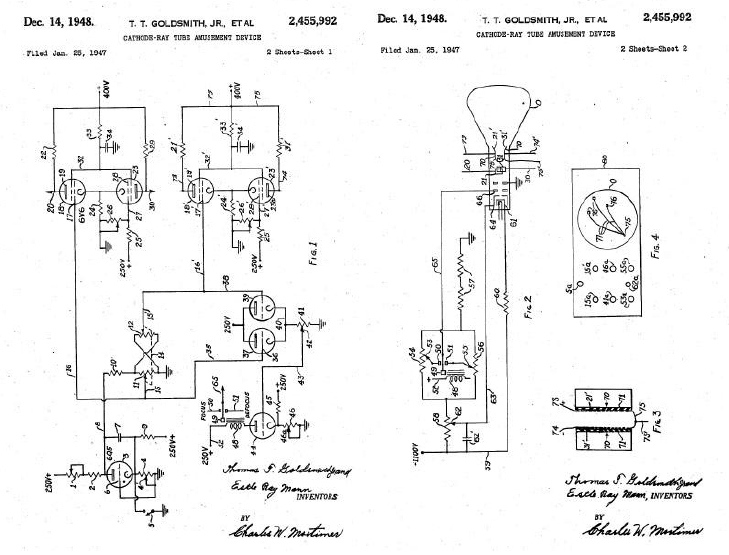
Schematic - Cathode-Ray Amusement Device
Starting with the very first patent for a video game in 1948, the "Cathode-Ray Tube Amusement Device", which was created by Thomas T. Goldsmith Jr & Estle Ray Mann. Thomas was very interested in the electronic radar systems they used for WWII, and thought it would be a good idea combine the cathode-ray tube with it to create a 'sort of' computer game, where the player can interact and control what is happening on-screen. However, this was never released to the public as an actual game, as it just wasn't commercially viable. - Ref 5.


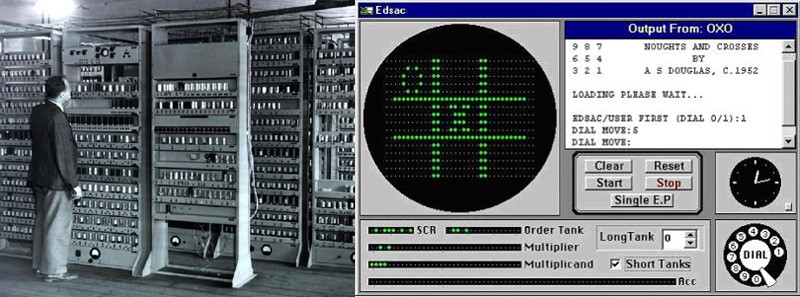
A.S. Douglas & "OXO" Game
A company named 'Loral'; In 1949, developed and manufactured complex military airborne electronics, instructed a young engineer 'Ralph Baer', to "build the best TV set in the world". So, Ralph, had the idea of including some sort an interactive game with it and advised them to do so, therefore, it would be a unique selling point and distinguish themselves from other TV sets. - Ref 4. Unfortunately, the management discarded that idea, thus, for now there still was no commercially available video game. Ralph's vision of a video game in homes became a reality a little further on in the timeline, 18 months after this. By this time, Claude Shannon created the foundation for computer controlled chess. Then, in 1952 Alexander Shafto Douglas, a British professor of computer science, created the first ever graphical computer game called "OXO". - Ref 5.This was Tic-Tac-Toe, and even though you can play this with just a piece of paper & a pen, this advancement was another step towards the entertainment we have today.

1954-1957 included: The first blackjack program, crated on an IBM-701 computer, "Hutspiel" was designed by the US military whereby blue and red players (Soviet and NATO commanders) battle it out, Arthur Samuel shows off his checkers program on national TV, and Alex Bernstein scripts the first chess program on an IBM-704 computer, capable of evaluating four half-moves ahead. However, none of these released to the public as actual games. In addition, David Rosen, former US Korean war veteran notices the rise in interest of mechanical coin-operated games on US military bases in Japan, and went on to start "Service Games" to export them to Japan. It wasn't until the 1960's that he made his own coin-operated games and adopted the name "SEGA", derived from the original "SErvice GAmes". - Ref 5.

Tennis For Two
Slowly but surely, 1958 crept up, and this was the year that would impact the greatest and influence more people than ever to be a part of this new technology. Willy Higinbotham Invented the "Tennis for Two" game, played on an oscilloscope, in order to keep visitors to the Brookhaven National Laboratories in New York entertained. This was improved a year later with a bigger, 15-inch screen, although, this was not actually patented as he didn't think he invented something. 1959 involved students at MIT creating "Mouse in the Maze" on a TX-0 computer. The player draws a maze using a light pen, and the mouse goes through it looking for cheese.
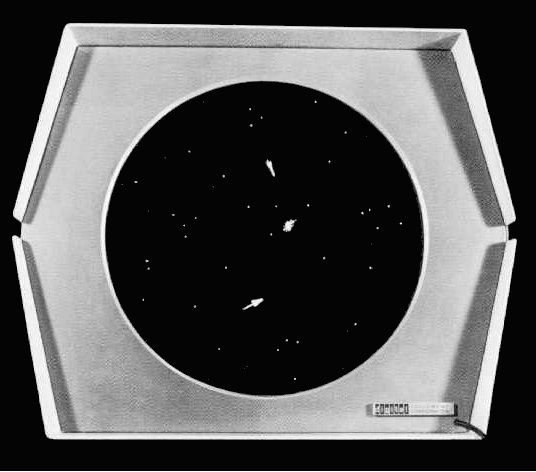
Space War
It wasn't until the 1960's that games became more graphically advanced than this. 1962 was groundbreaking, MIT student "Steve Russel", designed a game called "Space War" which was the first interactive computer game, created on a Digital Programmed Data Processor-1 minicomputer. This was amazing because you could have two space ships on a starry backdrop, fighting it out in an environment with varying gravity, which affected how the player would have maneuver the ship. Recreations of this game included "Asteroids" & "Galaxy Wars". - Ref 4.

"The Brown Box" Sketch
The words of John Kemeny from "Everyone is a programmer" - 1964. Himself and Thomas Kurtz created the computer time-share system and BASIC programming language at Dartmouth college. This was an amazing leap forward because it meant that now, anyone who learnt it could program games, and they did; a large number of games were now being spawned into the world of computers through many creative minds. Right after Dartmouth beats Princeton 28-14 in American football, a student from the college programs the first football game. 1966 was the year that Ralph Baer pops up again, this time with designs for his vision of playing a video game on a television set, he drew concepts on September 1st, which became the foundation of his development in TV video games - This one became patented.

More than a decade later from his initial idea, Ralph Baer invents the first video game console that works on a television set - "The Brown Box". The game that was played on it was called "Chase" and it consisted of two squares controlled by two players, chasing each other on the screen. Ralph and his team then add a light gun, and developed a total of 12 games for the 'Brown Box'. This was patented 1 year later in 1968. Baer & his team showed their work to a company called "Magnavox", who then released "Odyssey"; the first economically viable console in 1972. However, many dealerships failed to see its potential and turned it down, plus, a rumor spread that it only worked on Magnavox TV's, damaging potential sales.

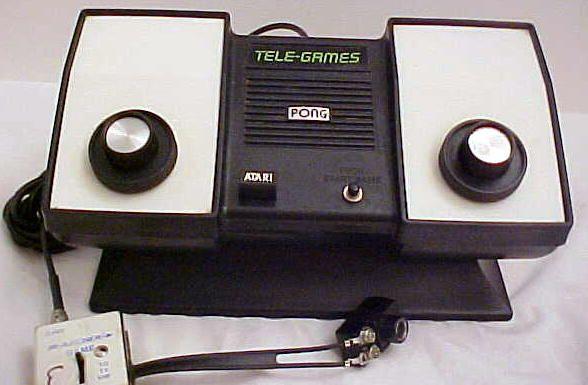
Tele-Games - Pong
Furthermore, Nolan Bushnell tried out Odyssey, and informed Dave Nutting that he found it uninteresting in comparison to "computer space" (His version of space wars). However, this is did not sell well at all because of its complexity for the user to play. Bushnell idealised that if a simpler game was made, they could be on for a winner. When Bushnell doesn't get the third of "Nutting Associates" he asks for, he leaves the company to start anew with Ted Dabney, called "Syzygy" - Later to be renamed "Atari". I few years on, the game that everyone knows "Pong", was released to the public for home use on their consoles in 1975. - Ref 1. It was so simple and easy to play, that it soon became a household name, and was a massive hit.


space invaders - Atari 2600
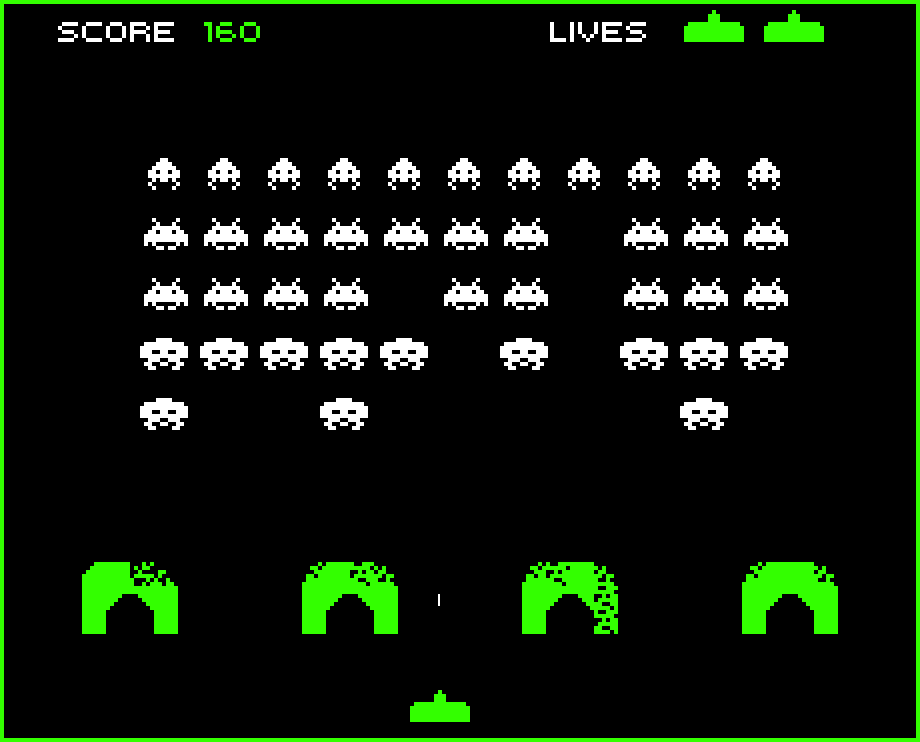
A couple of years later in 1977, Atari then went on to release the "Atari 2600", which included many more things i.e. Joystick, interchangeable cartridges, difficulty setting changes, and coloured graphics! This went on to play host to games such as "Space Invaders", "Breakout", and "Missile Command". In fact, in 1978, there were approximately 60,000 Space Invaders arcade machines flooding the US; It was so popular in Japan, there were 100-yen coin chortages! Finally, in 1979, Atari also develops the "Cosmos" - A handheld machine which has holograms within the graphics. - Ref 3. Although, this was never released as they didn't add to the gameplay, it was just for cosmetic reasons.

A little extra thought I'd like to explore are the factors that drive the technology to advance and become better. Before all of the video games we've come to know and love, people lived their lives without the entertainment we have access to now. We as human beings don't need computer games, and consoles etc, however, ever since the popular games hit the market (i.e. Pong, Space Invaders, Tennis for Two), the demand for these types of games has risen massively. As always, as demand rises, development rises, and over the years, they have become such a big part of our lives, we almost need it in order to get away from daily stressors in life. As a side note, a big factor driving the technology is money, everything is about making money, making the next best selling thing to generate profits. However, you can't make the next best seller is it doesn't improve on what has already been done, or is something original...

As computers became more apparent for almost everything, it is only in our nature to improve on it and make it better & faster. The better the computers, the more popular, the more people could contribute to development. "A true creator is necessity, which is the mother of invention" - Ref 6 The republic, book II, 369c, Plato. People started to rely heavily on computers, and so we need them to be reliable, efficient, and fast. This lead to a huge improvement in the physical technology; chips, circuit boards, resistors have all gotten smaller and more efficient. In addition, the constant need to improve on what has been done before, inspires others to do better - Thus, driving improvements not only on graphics, gameplay, storyline etc, but the power of the electronic components we're using. These kind of changes are only going to continue, and it's happening faster than ever, who knows what the games we play in 20 years time will be like? Would it make today's graphics look like Space Invaders?

Thank-you for following along up until this point, I will continue the timeline at a later date :)

References:
1-http://content.time.com/time/interactive/0,31813,2029221,00.html
2-http://www.make-video-games.com/make-video-games-articles/a-brief-history-of-video-games.htm
3-http://www.icheg.org/icheg-game-history/timeline/
4-http://inventors.about.com/library/inventors/blcomputer_videogames.htm
5-Leonard Herman, Jer Horwitz, Steve Kent, Skyler Miller. (2002). The history of video games.
6-The republic, book II, 369c, Plato.
Image Ref:
http://img.gawkerassets.com/img/186w2tvup4yuupng/original.png
http://iasl.uni-muenchen.de/links/GCA_ill193.png
http://www.gamerobs.com/geekames/fichiers/2010/7/6/1278426382.jpg
http://www.bnl.gov/coreImages/D2231008_TENNIS4TWO-300px.jpg
http://img.bhs4.com/C0/1/C01F477814B746ACA2C015152DA1DD82F9920A95_large.jpg
http://www.ralphbaer.com/video_game_history.htm
http://atariage.com/forums/uploads/monthly_06_2010/post-17711-127736023296.jpg
http://nodebox.net/node/documentation/concepts/subnetworks-space-invaders.png

Saturday, 26 October 2013

DMUGA Week 4 - Bradgate Park + More work! ^_^

So here we are, 1 month into the course and I'm just about keeping up - the reason I say 'just about' is due to pulling a few late nights to get the work done... Would recommend it short term, but definitely not a sustainable timetable.

I was pretty excited to go to Bradgate because I've seen some images beforehand and it looked fantastic! The weather didn't look to be great, nevertheless, we all turned up in the rain and soldiered on. Despite the bad conditions, the scenery was amazing, you could literally look anywhere and draw that as a final piece (If you could even get your sketchbook out without getting wet). Aside from the scenery, I found Chris's words about the history of the park really interesting; the fact that sticks in my head is about the memorial being in the shape of a tankard, due to his drinking; not sure why, but it does. In addition, Chris also put things into perspective a little bit more for me, his point about us only being here for a few weeks and improving rapidly, showed me that maybe I can do this?
Anyway, after a small talk, we decided to head up to the memorial because the view would be absolutely amazing... it was; if only we'd came on a better day. I sat down with my umbrella at the top and attempted my first ever thumbnail sketch of a landscape, and in my opinion it wasn't very good at all. One thing I've learnt from this course is that your first few attempts are most likely going to be bad, so I just carried on. I only managed to get a couple of sketches done at the top before it started to pour down, and it didn't really stop too long to get any more done that day, however, I did manage to find a good spot and map out what I wanted to do for my final this week. I went again on Thursday so the weather was a little bit better, got some more sketches done and was surprised at how hard it is to render trees! To this point, I'm still not very good at drawing trees & leaves, only slightly better than when I started. Overall, I think the visual design this week went ok, it could have been better, and I only hope to improve on drawing foliage.

Tuesday's Game Production went well, in the morning I managed to quickly get my alpha channels sorted (was having quite a few problems with it not showing/the Ps files weren't 100% correct etc). I think my wheelie bin turned out really well! Considering that a week ago, I thought I wouldn't be able to do it and was going to fail because it seems I just suck at everything on this course. So, in the end, I was very proud I'd done it to a reasonable standard. However, the next project Steve issued us with scares me far more (I'm sure they're making me fear for my life every single week). The architectural project is going to be a hard one in particular, getting all of the textures for whatever building we pick will be a challenge, especially to get some to a decent standard. It's quite hard for me to pick a building and go with it because I'm really picky, I don't want it: Too challenging that I won't do it in time, too big for the budget, too hard to access all the textures, too modern so that it's boring... ugghh! I'll have to pick one eventually, but I can't leave it too late.

The critical studies seminar this time was replaced with a library session in which we had a tutorial on how to properly use the available resources that we have access to. This was really helpful since we have to do a blog about the history of video games, and I have no idea where to even begin!
After this session, the Guru's and Grasshopper's brief this week is to create 20 silhouettes of potential weapons for out zombie apocalypse scenario, plus, 5 completed drawing of the ones we've chosen to carry forward. Now, don't get me wrong I'd love to do this without a doubt, but the work we already have will make it a challenge to get it done on time!

In conclusion, a pretty good week in terms of my mental attitude, although, the work is piling on fast and I just hope I can keep up with it all

Wednesday, 23 October 2013

DMUGA Week 3 - Hoping I will improve :)

Wow, what a first 2 weeks eh? I'm now into my 3rd week battling through and trying to stay alive.

Visual Design this week actually went well for once, it was raining heavily so we couldn't go outside, so we went inside the Queen's building instead. Moving onto 2 point perspective, getting a good view indoors for 2 point perspective was hard at first, but we settled in a spot and just went for it. I wanted to get the general idea of how to draw in 2 point from real life first, so I did a few construction lines and went from there. My first sketch turned out kind of alright, the idea was there and I could see how the perspective worked. To do a final piece in 2 point of inside the Queen's building would take forever, so I'm glad we don't have to do that. Having done 1 sketch, Jack recommended drawing looking up, and one looking down, so we went directly up to the next level so we had the same view as before, but higher up - the horizon line was lowered for this one and it too turned out ok. First time leaving this class and feeling good about myself.
There was no live model for life drawing this time, so we went round taking turns being the model, doing quick sketches standing, and seated on the sofa. What I found difficult about this was trying to draw the figures but in clothes this time; surprisingly hard. However, I liked the way my silhouettes turned out - what I thought would not be very good at all, actually ended up being my most favourite part of the lesson!

Game production was rather interesting as it always is, still having difficulties with the texturing of the bin. I'd mapped the bin lid in such a way that the corners joined up all the way around, just like a net. However, I still don't know what the correct way to do it is, but when I did this and tried to relax the net, things kept on going crazy and I couldn't find a solution. Thus, I did what is best in this situation... do it again. So I unwrapped it/broke up the net completely and started again, this time without joining the corners together. Success! It worked, now I could relax it properly and have the chequered map all in its correct proportions. Satisfied with this, time for Photoshop (of which I only know basics). It took me a while but I finally blended the main body of the bin together so it looked seamless, and not like the front & side views just pasted onto the model.

I thoroughly enjoyed the seminar where we got to discuss our favourite game and why these games are as likable as they are. According to our brainstorms, the highest occurring game was Skyrim, coming up in 5 different groups; I mean, how can anyone dislike Skyrim!? One the most fascinating things I found whilst playing the game is how well-done all of the textures are. I would stand in random places just to enjoy the scenery, not even to play the game through the story line; just wonder around and admire the work of the artists that created such an engaging world. Another very popular game series by Rockstar Games which has had many successes and recently released the most profiting game of all time: Grand Theft Auto 5. Despite not having played this game for longer than 20mins round a friend's house, I'm amazed at how detailed everything is, from the actions & activities you can carry out, to the physical moving world that you have an all-access pass to - It is incredible. To think that not that many years ago, our generation were playing on the old Nintendo 64's, Sega's Dreamcast, Gameboy's etc, that compared to today's entertainment, were very limited in what you could experience.
In the 'Gurus & Grasshoppers' meeting last week, the 3rd years were very helpful in explaining some things in 3ds Max, and reassured me that thing's aren't that bad - which is always good to know. Also, we decided on zombie apocalypse weapons as our project which should be a blast! So, at the moment, we just have to make a little mood board of weapons for some ideas. Hopefully, it'll turn out good!

Overall, a good week of lessons, and I want to get into the swing of things more, so hopefully that'll happen.